📌 Key Takeaway: The best lawn care ads are specific, local, and easy to act on. Lead with one clear problem, one clear promise, and one clear next step. Then keep improving based on what actually gets clicks.
Writing lawn care ads that earn clicks is not about sounding polished. It is about being relevant fast. Homeowners scroll past vague claims, but they stop when an ad speaks to a real need: a neglected yard, a busy schedule, or a service they can trust without chasing down details. That is where strong ad copy starts.
The same discipline that makes ads work also makes operations run better. A lawn company that keeps routes organized, tracks visits, and follows up cleanly can turn more clicks into booked work. That is one reason operators use complete lawn service management software like EZ Lawn Biller to stay on top of billing, routing, visit reports, the mobile app, reports, payroll, QuickBooks integration, and the customer portal. Good advertising gets attention. Good systems turn that attention into revenue.
Start with the homeowner, not the service
The strongest ads begin with the customer’s problem, not your company history. Homeowners do not wake up hoping to read about your equipment or how long you have been in business. They want an easier week, a better-looking yard, and fewer things on their list. Your copy should reflect that.
That means segmenting your audience before you write. A suburban homeowner worried about curb appeal needs a different message than a property owner who wants dependable seasonal treatment. A busy family may respond to convenience and reliability. A homeowner who takes pride in the lawn may care more about appearance and consistency. The more clearly you define the audience, the easier it becomes to choose the right angle.
Emotion matters here. A lawn is often tied to pride, family time, and neighborhood standards. If your ad speaks to those motivations, it feels more relevant. A simple line about enjoying a yard ready for cookouts or weekend gatherings can do more work than a generic claim about quality service.
A practical example makes this clear. Suppose a local company runs two ads for the same mowing service. One says, “Professional Lawn Care Services.” The other says, “Too Busy to Keep Up With Mowing? We Handle Weekly Service So Your Yard Stays Sharp.” The second version wins because it names the problem and promises relief. It does not try to impress. It tries to help.
Write headlines that stop the scroll
Your headline does the heavy lifting. If it fails, the rest of the ad never gets a chance. A good headline should be short, direct, and tied to one benefit. It can ask a question, make a promise, or create a sense of urgency, but it should never feel generic.
Questions work because they invite a quick mental answer. “Is Your Lawn Ready for Summer?” can pull in homeowners who already worry about how their yard looks. Promise-driven headlines work too, especially when they point to a specific outcome. “Get a Greener Yard Without the Weekend Work” speaks to convenience and results at the same time.
You also want search terms in the headline when possible. Phrases like “affordable lawn care” or “expert landscaping services” help match what people are already looking for. That makes the ad more relevant, which improves the chance that the right person clicks.
Keep the headline focused on one idea. If you try to cover mowing, treatments, cleanup, and pricing all at once, the message gets muddy. Strong ads do one job. They create enough curiosity or confidence for the homeowner to keep reading.
Make the design work as hard as the words
Visuals decide whether your ad feels credible at a glance. Clean design, sharp images, and a clear layout help people process the message quickly. If the ad looks messy, the copy has to fight for attention. That slows everything down.
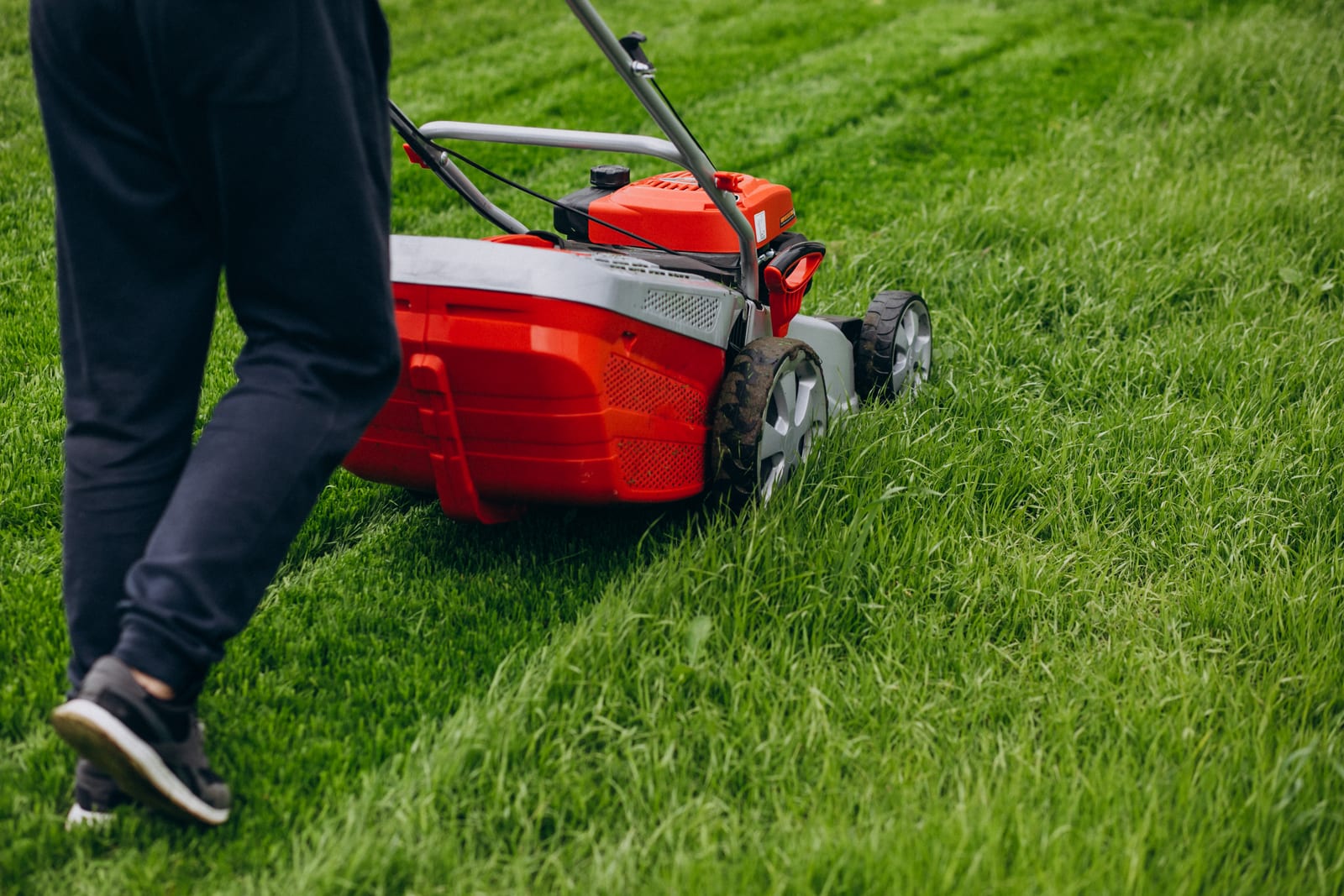
Use images that show real lawn work and real results. A well-kept property, a crisp mowing stripe, or a technician at work gives the ad instant context. The image should reinforce the message, not distract from it. If the ad promotes reliability, the photo should look orderly. If it promotes quality, the image should show a finished property that supports that claim.
Color and spacing matter as well. Green works because it connects naturally to lawn care, but contrast is what makes the important part visible. A strong call-to-action button or a phone number needs room to stand out. White space is not wasted space. It gives the eye a place to rest and helps the main message read faster.
Readable fonts and simple layouts make the ad feel professional. Clutter creates friction. When homeowners have to work to understand the ad, they often move on. Clear design reduces that friction and supports the copy instead of competing with it.
Make the offer worth the click
An ad can be well written and still underperform if the offer is weak. People click when they see a reason to act now. That reason can be a discount, a free estimate, a bundled service, or a convenience-based promise that reduces effort.
The offer should fit the audience. A busy homeowner may care less about a flashy discount than about dependable service that removes a task from their calendar. In that case, an offer like “We Handle the Yard So You Don’t Have To” can be more persuasive than a generic percentage off. A price-sensitive customer, on the other hand, may respond better to a first-service special or seasonal promotion.
Urgency can help, but it has to feel real. A deadline, a seasonal window, or limited availability can move someone from interest to action. The point is not to pressure people. It is to give them a clear reason not to keep postponing the decision.
The best offers are simple. If the homeowner has to decode the promotion, the click rate drops. State the benefit plainly, connect it to a real pain point, and make the next step obvious.
Use testimonials to reduce doubt
Trust is one of the biggest barriers in local service advertising. People may like the ad, but they still wonder whether the company shows up on time, communicates well, and delivers what it promises. Testimonials help close that gap.
A short review can do more than a paragraph of self-praise. When a customer says the service was reliable, easy to work with, or worth the cost, the message feels credible because it comes from outside the business. A screenshot of a review, paired with a clean photo of the finished work, gives the prospect both proof and context.
Video testimonials can strengthen that effect even more. When a satisfied customer speaks in their own voice, the result feels human and immediate. That kind of proof is especially useful for homeowners who are comparing several local options and trying to decide who to trust with recurring service.
Keep the testimonial specific. A vague line like “Great company” does not say much. A comment about consistent visits, good communication, or a yard that looks better week after week gives the prospect a concrete reason to believe the ad.
Track what gets clicks, then refine the message
Ad writing improves when you treat it like a process instead of a guess. The best-performing copy is usually the result of testing, not one perfect draft. Track what people actually respond to, then shift your message based on evidence.
Look at which headlines get attention, which images lead to more engagement, and which offers produce real inquiries. Sometimes the winner is obvious. A question-based headline may outperform a broad statement. A local image may beat a polished stock photo. A service-specific offer may outperform a general discount. The only way to know is to watch the numbers.
That data also helps you avoid repeating weak patterns. If an offer keeps getting ignored, it may be too broad or too hard to understand. If one message works well for mowing but not for seasonal treatments, the difference may be the customer’s motivation. Each result tells you something useful about what your audience values.
This is where organized operations matter again. Using EZ Lawn Biller helps lawn companies manage leads, track billing, and review customer trends in one place. When your records are clean, it is easier to connect ad spend to actual revenue. That makes future campaigns smarter and less wasteful.
Win local searches with local language
Most lawn care customers are not searching broadly. They want service near them. That means local language belongs in your ads. When you include a city name, neighborhood reference, or familiar local phrase, the ad feels more relevant to the searcher.
This works in both paid ads and organic visibility. Terms like “lawn care in [City Name]” or “best landscapers near me” help connect your message to local intent. The same idea applies to ad copy. If the ad feels like it was written for people in the area, it is more likely to get attention.
Local references can also make your business feel rooted in the community. A mention of a nearby landmark, subdivision, or seasonal concern gives the ad a more personal tone. That does not mean forcing in location names for the sake of it. It means speaking like someone who understands the market.
Local trust compounds over time. When the ad looks relevant and the company shows up consistently, the customer is more likely to remember the name later. That is how ads support long-term growth, not just one-off clicks.
Match the platform to the message
Different platforms reward different styles of advertising. Google Ads tends to capture intent, so clear service terms and strong local relevance matter most there. Social platforms like Facebook and Instagram give you more room to use visuals, simple stories, and reminders that keep your name visible.
That does not mean one platform is always better than another. It means each platform should reflect how people use it. Search ads should be direct. Social ads can be more visual and conversational. A homeowner scrolling casually may respond to a clean before-and-after image, while someone searching for immediate help may respond to a straightforward service offer.
Retargeting adds another layer. If someone visits your site but does not book, a follow-up ad can bring you back into view without starting over. That is often enough to recover interest from people who were close to deciding but needed more time.
The goal is consistency. A homeowner should see the same promise repeated in different formats: reliable service, clear communication, and an easy path to book. When the message stays aligned across platforms, the brand feels stronger.
Keep the message simple and keep improving it
The best lawn care ads do not try to say everything. They say the right thing to the right person at the right time. That means understanding your audience, writing a headline that earns attention, backing it up with a clear offer, and using proof that lowers doubt.
From there, the real work is refinement. Watch what gets clicked. Notice which ads turn attention into calls or bookings. Then tighten the message again. Over time, those small improvements add up.
That same mindset applies to the business behind the ads. Lawn companies grow faster when their operations are organized, their follow-up is reliable, and their customer communication is clean. A strong ad brings people in. A strong system keeps them coming back.
If you want your ads to do more than generate curiosity, focus on clarity first. Speak to a real need, show a real result, and make it easy to respond. That is how clicks turn into customers.
Frequently Asked Questions
How should lawn care ads be written if I want more people to click? You should lead with the homeowner’s problem, not your company’s credentials. People respond faster to ads that speak to a neglected yard, a packed schedule, or the desire for a service they can trust without extra effort. Keep the message specific, clear, and relevant right away.
Why does a generic lawn care headline usually underperform? A generic headline does not connect to a real need, so homeowners keep scrolling. “Professional Lawn Care Services” sounds polished, but it does not tell the reader why the offer matters to them. A more direct message about staying on top of mowing or keeping a yard sharp gives people a reason to pay attention.
What kinds of homeowner motivations should I target in lawn care ad copy? Focus on convenience, reliability, curb appeal, and pride in the yard. Different homeowners care about different outcomes: a busy family may want less work, while a property owner may care more about dependable seasonal treatment. Ads work better when they match the motivation behind the search or scroll.
How do operations affect whether lawn care ads turn into booked jobs? Good ad copy gets attention, but organized operations help turn that attention into revenue. Keeping routes organized, tracking visits, and following up cleanly makes it easier to convert clicks into work. Tools that handle billing, routing, visit reports, payroll, QuickBooks integration, and the customer portal can support that process.